Wendell Berry and Wilma Dykeman
A memorial letter
Subject: Wendell Berry and Wilma Dykeman
Author: Jim Stokely
Permission to publish granted by the author
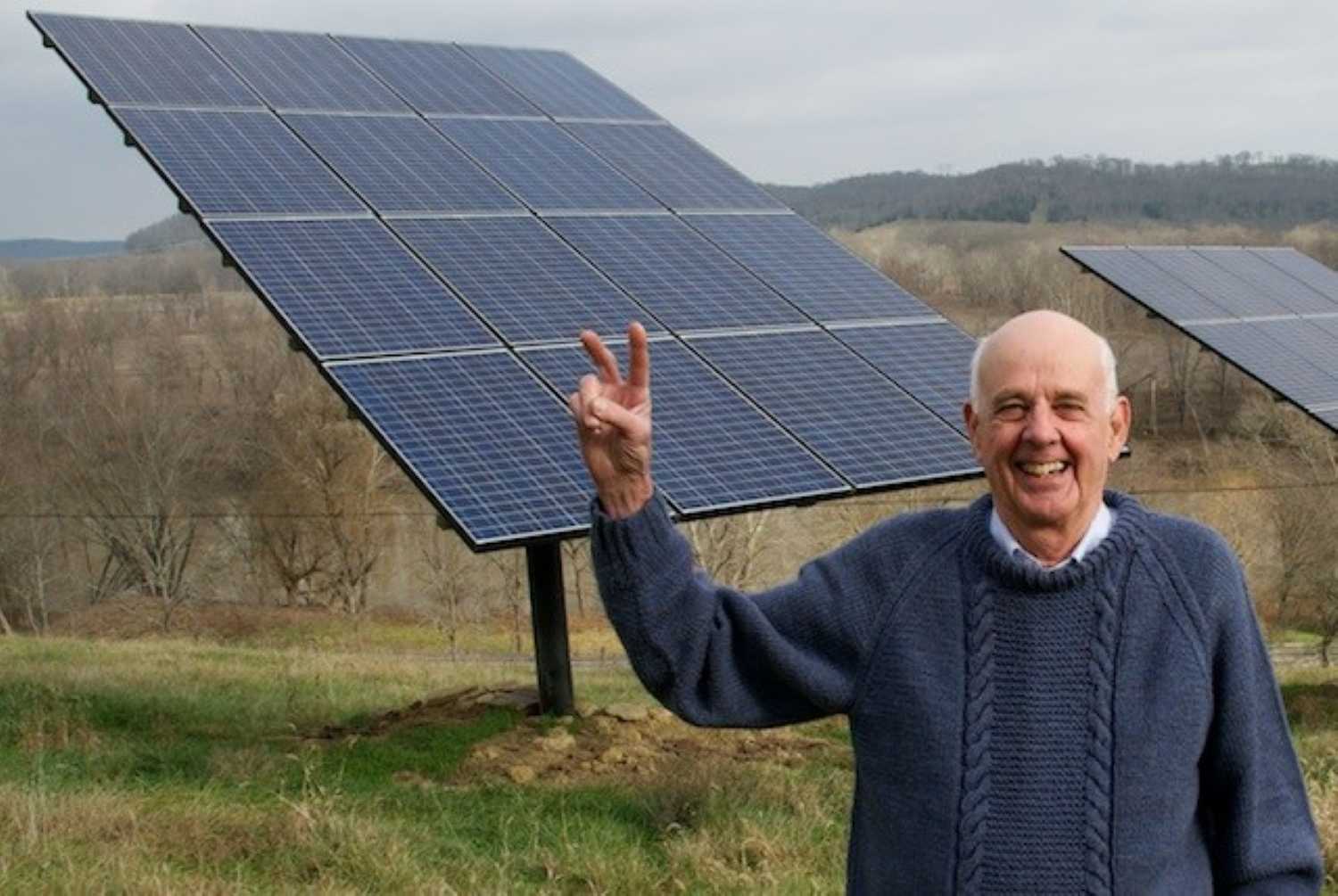
Around 1980, Wendell Berry gave a talk at Carson-Newman College (now University) in Jefferson City, Tennessee. Although the modest-sized meeting room was packed, Berry began his remarks by saying that the audience was much bigger than it appeared. “At your shoulders stand your parents,” he said. “Behind you stand your grandparents. Your ancestors never leave you.”
Berry was tall and thin from continual farm work – a walking picture of the stereotypical long and lanky Southern mountaineer, even though he lived and worked just west of the Eastern Kentucky mountains.
A world-class essayist, poet, and environmental advocate, Wendell Berry came to national attention with the 1977 publication of The Unsettling of America: Culture and Agriculture. This work of non-fiction decried the industrialization of agriculture and became a foundational text for many current movements related to land and food stewardship.
Wendell Berry’s and Wilma Dykeman’s speaking engagements occasionally brought them together. As Wendell Berry wrote in a letter read at Wilma’s 2007 memorial service by her son Dykeman:
“It would not have occurred to me to ask for Wilma Dykeman’s friendship, and she was not the sort to make much fuss in offering it, but about thirty years ago I was speaking at Carson-Newman College, and she showed up. I had just published The Unsettling of America, which is something that she knew well. Our land, which is something we ought to put first, we put last. We were using it and abusing it, and we were hardly even thinking about it. I was a young writer, way out on a limb, and she had come out in my support. I felt this as a gift of friendship. I still think this is what it was, and I am still grateful…
“The last time I saw her, in 1999, we were at a meeting of the Fellowship of Southern Writers in Chattanooga. I had taken part in a panel discussion, and when I saw her afterwards in the back of the theater, she paid me a compliment on something that I had said. I replied, ‘Well, you’re mighty sweet to say so.’
“’Mister Berry,’ she said fiercely, ‘I’m not sweet. I’m honest. Don’t say I’m sweet.’
“I said, ‘I was just trying to flatter you and get on your good side.’
“She said, ‘Well, you’ll have to do better than that.’
“She probably would not like me to say so, but at that moment I loved her very much, as now I love and honor her memory.”