The French Broad River Partnership - Part One
by Anne Keller and Tim Fox
TITLE: The French Broad River Partnership Water Quality Group
AUTHORS: Anne Keller and Tim Fox
PERMISSION to publish granted by the authors
Encompassing an eight-county area and over 5000 sq mi., the watershed of the French Broad River (FBR) has been attractive to humans for thousands of years for food, water, agriculture and later, industry. Human impacts in the region have often been detrimental due to chemical pollution, streambank impacts, and overuse. But it wasn’t until 2017 that a group of environmental, business and government organizations began discussing the creation of a watershed-wide organization to support the health and beneficial uses of the FBR.
In 2018, the French Broad River Partnership (FBRP) was formed. Environmental organizations (e.g. RiverLink, Haywood Waterways, Mills River Partnership, MountainTrue, Asheville Greenworks and EQI) played a leading role, but so did state agencies (NCWRC, NCDEQ) and business-focused groups (Tourism Development Authorities, Chambers of Commerce, river rafters, breweries, Trout Unlimited), and the Land of Sky Regional Council (LOSRC). The FBRP mission (www.frenchbroadriver.org) is to maintain and improve stream health within the French Broad River Watershed for environmental and economic benefits. The FBRP vision is that broad-based interests work collaboratively to ensure the French Broad River Watershed serves as a source of drinking water and recreation while supporting biodiversity, sustainable agriculture, forestry, and economic growth.
In its early months, the FBRP Steering Committee established work groups to help achieve FBRP goals. These work groups are: Outreach and Education, Business and Recreation, and Water Quality (WQG). The latter group has been the largest and most active of the FBRP, working in several counties on new and continuing projects that will improve and protect the river. WQG members are focused and practical about what they take on, being all-volunteers with jobs, families, etc., and having little funding. Three focal areas were identified as Richland Creek in Haywood Co., the Upper Swannanoa in Montreat, and Cane Creek in Fairview.
The first two areas had ongoing work led by Haywood Waterways and the LOSRC. Projects along Richland Creek included:
· the relocation and restoration of Shelton Branch, which flows into Richland Creek; and
· streambank stabilization along Richland Creek.
In the Upper Swannanoa, projects include:
· the installation of a rain garden at the Town of Black Mountain (TOBM) library;
· a bioretention area at the Lake Tomahawk pavilion and at the TOBM golf course;
· stream restoration along Tomahawk Branch;
· the reduction of impervious surface and implementation of bioretention, a stormwater wetland, and pollinator islands at the TOBM Recreation and Parks facility on the Swannanoa River; and
· the riparian and water quality assessment of Flat Creek in Montreat, together with a stormwater system inventory, and recommendations for green infrastructure projects and homeowner incentives, which also resulted in a project to increase and improve the storage capacity of Lake Susan.
Interest in starting to work in Cane Creek stemmed from its pollution of the main stem of the FBR at their confluence south of the airport, so the WQG began working there immediately, identifying issues, potential community collaborators, and ways to get funding and support.
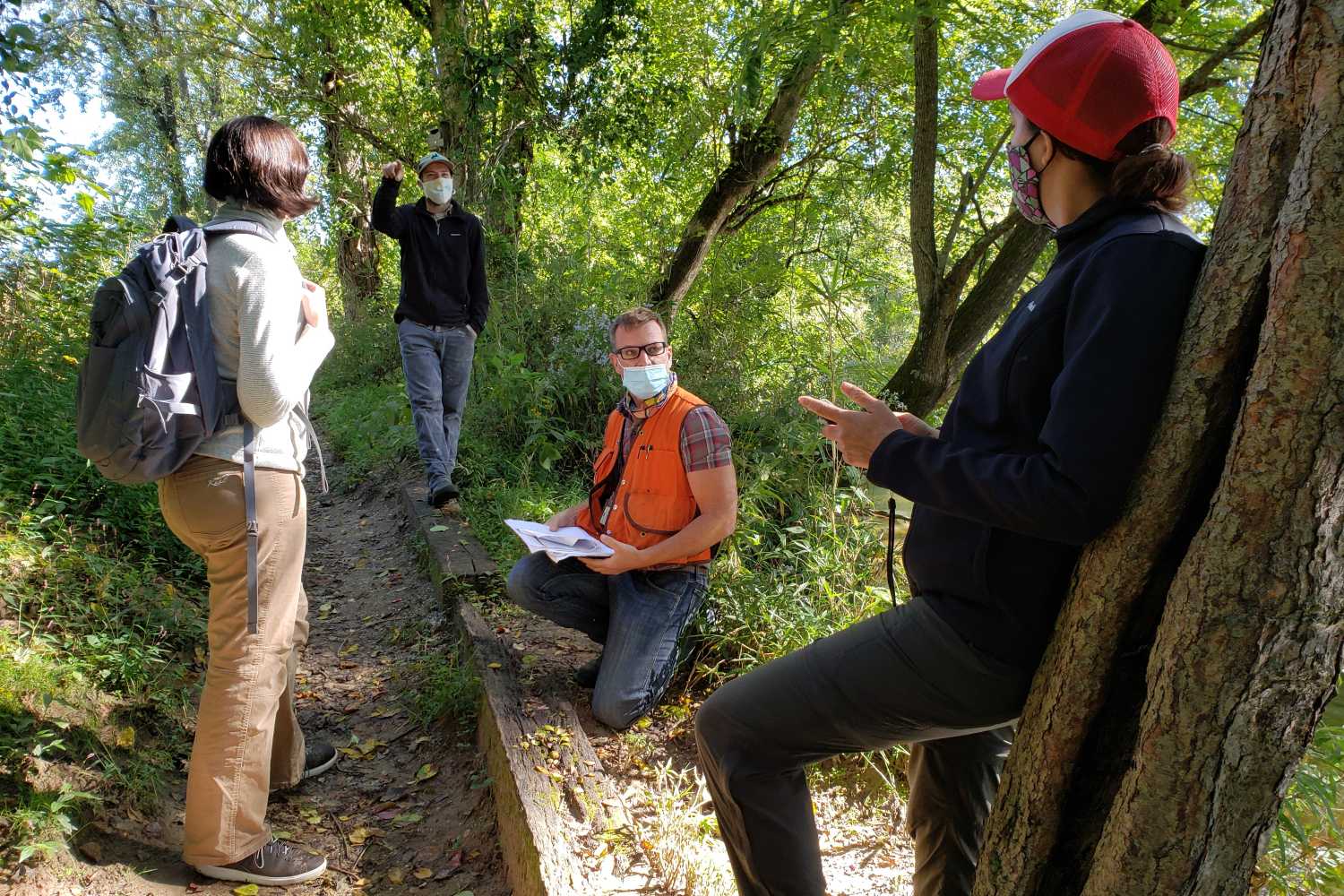
A key first effort was to develop a Watershed Action Plan (WAP) including identifying areas of concern, local participants, and approaches for water quality improvement that could lead to state and federal funding. The WQG collected basic water quality data, sources of impact, and priorities to stimulate improvement. During Covid, the Group continued collecting data, establishing relationships with US Departmentof Agriculture staff and assessing the worst-impacted areas.
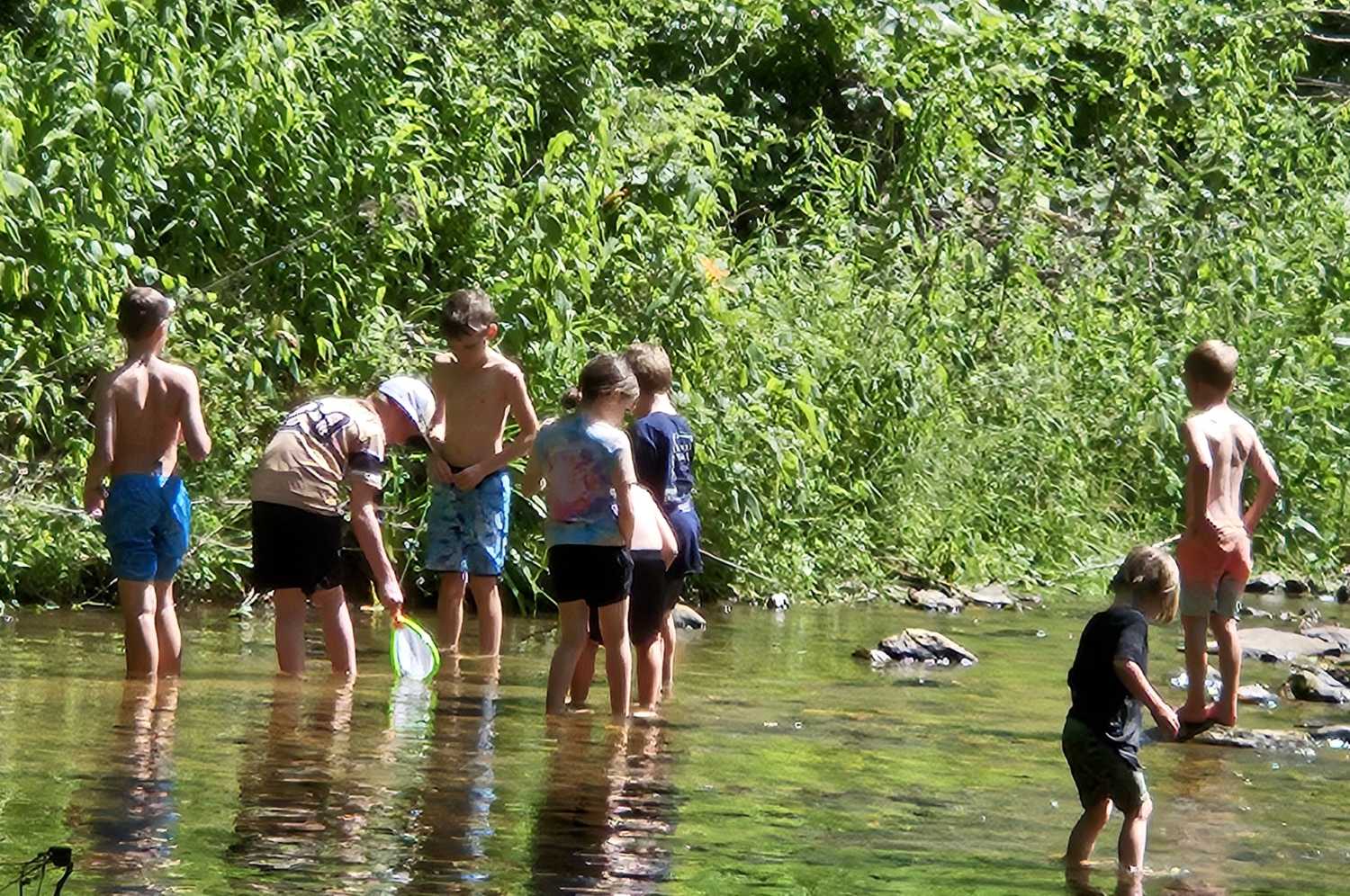
The area’s first community event, in 2024, was held at Turgua Brewery in Fairview and attended by about 100 people. Kids got to identify bugs in the creek. Adults discussed the endangered hellbender salamander, ways to address impacts from development and agriculture, and how to install rainwater collectors. The WQG planned to harness that community interest, but then came Helene and the Group’s work halted for a year. The Cane Creek project is being reinvigorated now, with the completion of the WAP, and the WQG continues to identify and provide support for the implementation of Watershed Improvement Projects.
On a broader scale, segments of streams within the Water Quality Group’s three focal areas are “impaired” for bacteria, meaning that levels are higher than is acceptable based on water quality standards. Since these bacteria from animal guts can cause human health impacts, and the FBR Basin is a recreation and tourist destination, it is critical for local and state agencies to address the issue. Currently the state of North Carolina uses another measure – fecal coliform – to indicate the quantity of bacteria present in waters, but it is not as closely aligned with human health impacts as the measure of Escherichia coli, a specific bacterium. The proposed move to the use of an E. coli standard as recommended by Environmental Protection Agency, that correlates directly with acute health risks, will provide the highest level of confidence and usabled ata to those recreating and thus support public health and the recreational economy. The FBRP strongly supports replacing the existing fecal coliform bacteria standard with the new E. coli standard to serve as the pathogenetic indicator in freshwater Primary Recreation (Class B) waters. This standard change, which is expected to be adopted by the state in spring 2026,will be in alignment with the FBRP’s mission statement and recreational monitoring programs within the region.
The FBRP Water Quality workgroup has contributed significant benefits to our region through collaboration, cooperation, hard work, connecting interested parties, and continuing to evaluate the needs of the FBR relative to improving water quality, stream stability,and aquatic animal diversity. The WQG is proud of its accomplishments and plans to continue.
Please contact Tim Fox, NCDEQ, if you have questions at: tim.fox@deq.nc.gov.